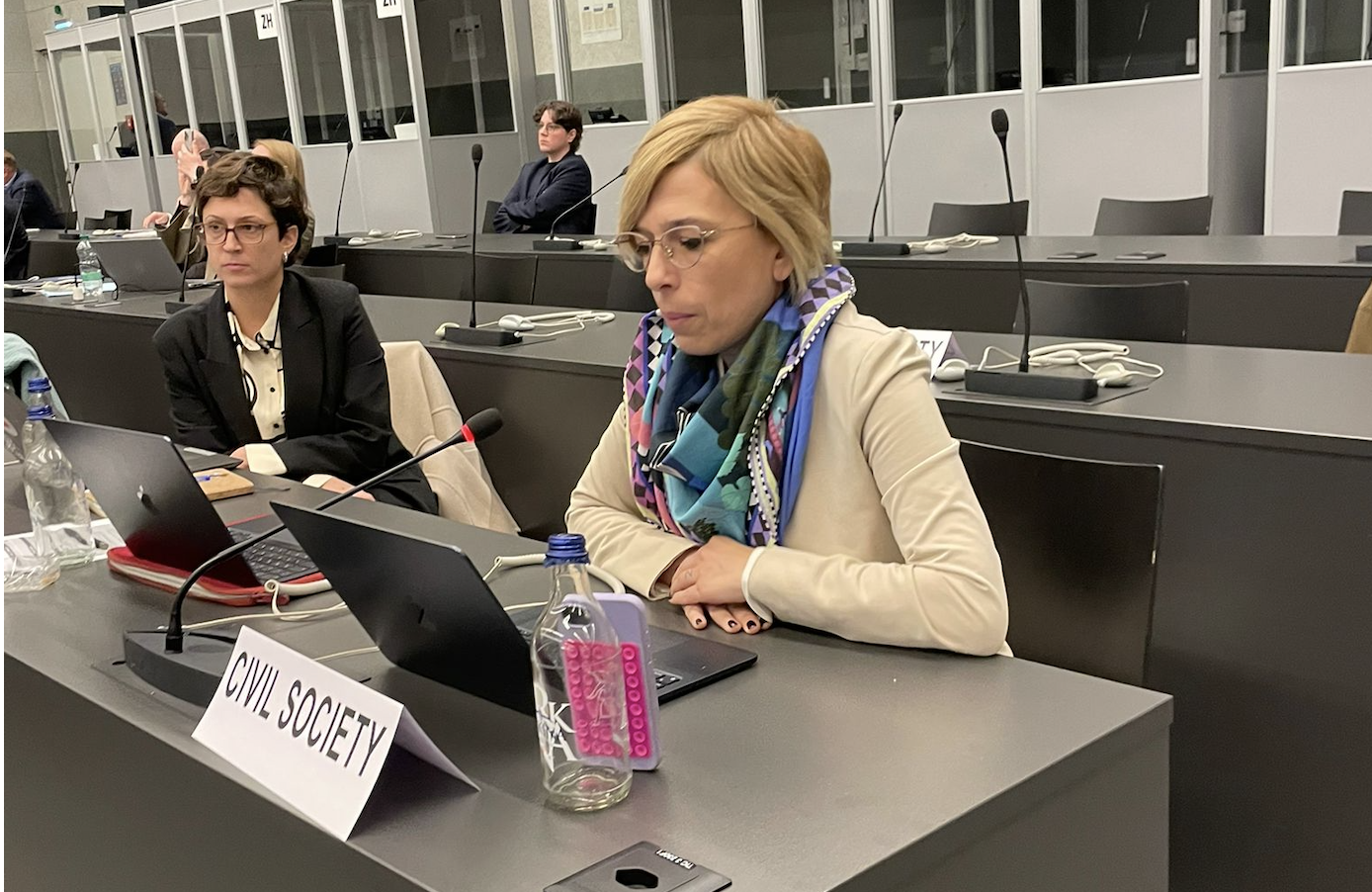
My name is Elif Topkaya Sevinç. I speak on behalf of the Regional Civil Society Mechanism.
We cannot open this Forum and ignore how war is derailing sustainable development.
Right now, the escalation of armed conflict, the illegal attack on Iran by Israel and the United States and Russia’s ongoing war against Ukraine, is bringing catastrophic human, social and environmental harm. It is pulling the world into cascading crises: mass civilian suffering, displacement, destroyed infrastructure, and a widening economic shock that directly fuels energy poverty and deepens food insecurity.
War takes human lives, overwhelmingly civilian lives and it leaves behind grief, disability and trauma that echo for generations. And it destroys the civilian infrastructure people rely on to survive: water and sanitation systems, energy networks, housing, transport and food supply chains, turning rights into emergencies and pushing entire populations into poverty.
War also accelerates climate breakdown: the first 14 days of the US–Israel war on Iran generated over 5 million tonnes of CO₂-equivalent emissions.
We are currently also observing a broader militarisation of our region and beyond. As defence spending rises and arms flows expand, public resources are being diverted from the well-being economy.
At the same time, a persisting structural violation is eroding the foundations of sustainable development across the region: anti-democratic attacks. We witness a wave of repression: political prisoners, targeting of human rights and environmental defenders, attacks on independent media and academia, and laws that increasingly criminalise civic engagement. “Foreign agents” laws are being used to stigmatise, restrict and silence feminist, LGBTI and climate civil society, cutting off cross-border cooperation and shrinking the space for accountability.
This matters for multilateralism. When civil society is excluded, intimidated or reduced to symbolism, accountability weakens and implementation suffers. The SDGs cannot be achieved without civil society organisations and social dialogue.
Simultaneously, normative standards and the UN Declaration on the Right to Development make this explicit: States have a duty to cooperate to ensure development based on shared principles of justice, equity, and international cooperation.
This reality shapes the SDGs under review this year.
On SDG 6, water is life.
Yet it is still commodified, polluted and, in conflict settings, weaponised. Water quality is regressing and frontline communities are hit hardest. We need rights-based WASH strategies that prioritise safe public services, menstrual health, accessible sanitation and hygiene in humanitarian response, alongside protection of civilian water infrastructure, accountability for pollution and investment in resilient, publicly governed systems.
On SDG 7, energy poverty is rising and impacting people from multi-marginalised communities the most.
Simultaneously, energy is increasingly entangled with geopolitics and conflict. We need a Just Transition. The transition must not reproduce colonialism driven by extractivism, community displacements and corporate capture. SDG 7 should move us away from ecocide and unsustainable practices and towards a future that respects the rights of nature, yet we are still seeing petrol populism and fossil fuel subsidies.
On SDG 9, infrastructure faces growing threats from armed conflict and climate change, as well as cyber and technological risks. Strengthening resilience requires integrated approaches, including peacebuilding and preparedness for multiple, overlapping crises. Human rights must be the core of innovation, especially innovation in infrastructure. Transport systems must be inclusive and participatory, ensuring that the furthest left behind communities help shape infrastructure priorities.
On SDG 11, cities cannot be sustainable if housing is treated primarily as an asset. The scale of the housing affordability challenge is measurable: in 2024, 8.2% of people in the EU lived in households spending 40% or more of their disposable income on housing. We need rights-based housing strategies that expand non-market options: social and public housing and rent regulation, alongside safeguards against speculative vacancy and displacement. Urban planning must be participatory and accessible, with dedicated mechanisms for those most affected to shape mobility and service priorities.
On SDG 17, partnerships must be grounded in equity, accountability and civic space. Digital governance and emerging technologies, including AI, require transparency and regulation to prevent bias, discrimination and environmental harm. We need to ensure that communities are not excluded from essential services and free access to information or targeted through surveillance and hate due to political repression.
This is a moment for political courage, decision-makers:
Without that, the SDGs will remain words on paper and people will keep paying the price.
Thank you.
We cannot open this Forum and ignore how war is derailing sustainable development.
Right now, the escalation of armed conflict, the illegal attack on Iran by Israel and the United States and Russia’s ongoing war against Ukraine, is bringing catastrophic human, social and environmental harm. It is pulling the world into cascading crises: mass civilian suffering, displacement, destroyed infrastructure, and a widening economic shock that directly fuels energy poverty and deepens food insecurity.
War takes human lives, overwhelmingly civilian lives and it leaves behind grief, disability and trauma that echo for generations. And it destroys the civilian infrastructure people rely on to survive: water and sanitation systems, energy networks, housing, transport and food supply chains, turning rights into emergencies and pushing entire populations into poverty.
War also accelerates climate breakdown: the first 14 days of the US–Israel war on Iran generated over 5 million tonnes of CO₂-equivalent emissions.
We are currently also observing a broader militarisation of our region and beyond. As defence spending rises and arms flows expand, public resources are being diverted from the well-being economy.
At the same time, a persisting structural violation is eroding the foundations of sustainable development across the region: anti-democratic attacks. We witness a wave of repression: political prisoners, targeting of human rights and environmental defenders, attacks on independent media and academia, and laws that increasingly criminalise civic engagement. “Foreign agents” laws are being used to stigmatise, restrict and silence feminist, LGBTI and climate civil society, cutting off cross-border cooperation and shrinking the space for accountability.
This matters for multilateralism. When civil society is excluded, intimidated or reduced to symbolism, accountability weakens and implementation suffers. The SDGs cannot be achieved without civil society organisations and social dialogue.
Simultaneously, normative standards and the UN Declaration on the Right to Development make this explicit: States have a duty to cooperate to ensure development based on shared principles of justice, equity, and international cooperation.
This reality shapes the SDGs under review this year.
On SDG 6, water is life.
Yet it is still commodified, polluted and, in conflict settings, weaponised. Water quality is regressing and frontline communities are hit hardest. We need rights-based WASH strategies that prioritise safe public services, menstrual health, accessible sanitation and hygiene in humanitarian response, alongside protection of civilian water infrastructure, accountability for pollution and investment in resilient, publicly governed systems.
On SDG 7, energy poverty is rising and impacting people from multi-marginalised communities the most.
Simultaneously, energy is increasingly entangled with geopolitics and conflict. We need a Just Transition. The transition must not reproduce colonialism driven by extractivism, community displacements and corporate capture. SDG 7 should move us away from ecocide and unsustainable practices and towards a future that respects the rights of nature, yet we are still seeing petrol populism and fossil fuel subsidies.
On SDG 9, infrastructure faces growing threats from armed conflict and climate change, as well as cyber and technological risks. Strengthening resilience requires integrated approaches, including peacebuilding and preparedness for multiple, overlapping crises. Human rights must be the core of innovation, especially innovation in infrastructure. Transport systems must be inclusive and participatory, ensuring that the furthest left behind communities help shape infrastructure priorities.
On SDG 11, cities cannot be sustainable if housing is treated primarily as an asset. The scale of the housing affordability challenge is measurable: in 2024, 8.2% of people in the EU lived in households spending 40% or more of their disposable income on housing. We need rights-based housing strategies that expand non-market options: social and public housing and rent regulation, alongside safeguards against speculative vacancy and displacement. Urban planning must be participatory and accessible, with dedicated mechanisms for those most affected to shape mobility and service priorities.
On SDG 17, partnerships must be grounded in equity, accountability and civic space. Digital governance and emerging technologies, including AI, require transparency and regulation to prevent bias, discrimination and environmental harm. We need to ensure that communities are not excluded from essential services and free access to information or targeted through surveillance and hate due to political repression.
This is a moment for political courage, decision-makers:
- end the impunity of war.
- protect multilateralism.
- deliver on your financial contributions to the UN.
- protect civic space.
- address root inequalities.
- and act on the duty to cooperate.
Without that, the SDGs will remain words on paper and people will keep paying the price.
Thank you.