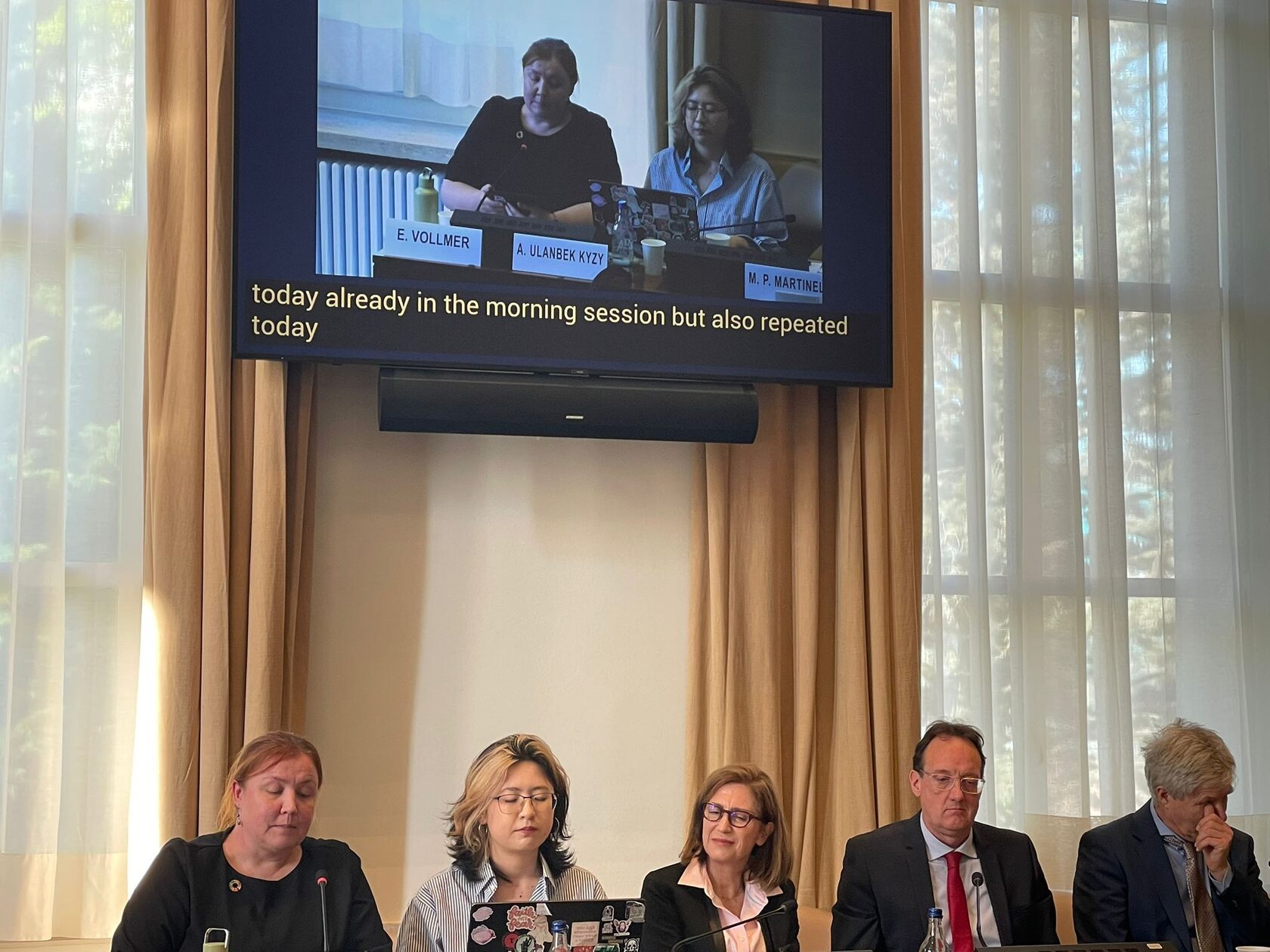
ECE RCEM statement given by Elis Vollmer
Thank you, Chair.
I speak on behalf of the Civil Society Regional Mechanism, representing constituencies from across the UNECE region.
We welcome this session's focus on urban mobility and road safety, because from a civil society perspective, how people move through their cities is inseparable from whether those cities are just, inclusive, and resilient.
Our central message is this:
Sustainable urban mobility will not be achieved through technical solutions alone. It requires that the people most affected – and most often left behind – are genuinely involved in designing, shaping, and evaluating the systems that serve them.
Across the region, transport systems continue to fall short for the people who need them most. Persons with disabilities, older persons, children, women, low-income households, and marginalised communities such as Roma face daily barriers — not as exceptions, but as a structural norm.
What works, where it exists, shares common features: co-design with affected communities from the outset, sustained investment rather than one-off pilots, and accountability mechanisms that go beyond user satisfaction surveys. Age-friendly and disability-inclusive transport frameworks have demonstrated that designing for the most vulnerable improves systems for everyone. But these remain the exception rather than the rule.
We also raise a concern about measurement. Aggregated data routinely masks inequality. Indicators must be disaggregated by gender, age, disability, and income to reveal who is genuinely being served — and who is not. Civil society organisations are often best placed to gather this granular, lived-experience data, and should be resourced and recognised as partners in doing so.
Transport is one of the largest contributors to urban air pollution and greenhouse gas emissions across the region, and the burden of that pollution falls disproportionately on low-income communities and those living closest to major roads.
We would also caution against approaches that achieve emissions reductions on paper while displacing the costs onto vulnerable communities. Climate goals and social equity goals must be pursued together.
From the civil society perspective, we draw together five calls for this session:
First, disaggregate transport data by gender, age, disability, and income — and resource civil society to contribute to that evidence base.
Second, end planning silos. Integrate transport with housing, health, and social services, and build participatory planning processes into governance frameworks as a standard, not an exception.
Third, pair climate and emissions strategies with affordability protections — sustainable mobility must not come at the expense of those least able to bear the cost.
Fourth, adopt Safe Systems and Vision Zero approaches across the region, with meaningful community engagement built into their design and evaluation.
Fifth, direct financing explicitly toward closing mobility gaps — and establish accountability mechanisms with civil society participation to ensure it does.
SDG 11 asks us to make cities inclusive, safe, resilient, and sustainable. On mobility and road safety, we have the frameworks, the evidence, and many of the tools. What is needed now is the political will to centre the people most often left behind — and to resource the engagement that makes that possible.
Thank you, Chair.
I speak on behalf of the Civil Society Regional Mechanism, representing constituencies from across the UNECE region.
We welcome this session's focus on urban mobility and road safety, because from a civil society perspective, how people move through their cities is inseparable from whether those cities are just, inclusive, and resilient.
Our central message is this:
Sustainable urban mobility will not be achieved through technical solutions alone. It requires that the people most affected – and most often left behind – are genuinely involved in designing, shaping, and evaluating the systems that serve them.
Across the region, transport systems continue to fall short for the people who need them most. Persons with disabilities, older persons, children, women, low-income households, and marginalised communities such as Roma face daily barriers — not as exceptions, but as a structural norm.
What works, where it exists, shares common features: co-design with affected communities from the outset, sustained investment rather than one-off pilots, and accountability mechanisms that go beyond user satisfaction surveys. Age-friendly and disability-inclusive transport frameworks have demonstrated that designing for the most vulnerable improves systems for everyone. But these remain the exception rather than the rule.
We also raise a concern about measurement. Aggregated data routinely masks inequality. Indicators must be disaggregated by gender, age, disability, and income to reveal who is genuinely being served — and who is not. Civil society organisations are often best placed to gather this granular, lived-experience data, and should be resourced and recognised as partners in doing so.
Transport is one of the largest contributors to urban air pollution and greenhouse gas emissions across the region, and the burden of that pollution falls disproportionately on low-income communities and those living closest to major roads.
We would also caution against approaches that achieve emissions reductions on paper while displacing the costs onto vulnerable communities. Climate goals and social equity goals must be pursued together.
From the civil society perspective, we draw together five calls for this session:
First, disaggregate transport data by gender, age, disability, and income — and resource civil society to contribute to that evidence base.
Second, end planning silos. Integrate transport with housing, health, and social services, and build participatory planning processes into governance frameworks as a standard, not an exception.
Third, pair climate and emissions strategies with affordability protections — sustainable mobility must not come at the expense of those least able to bear the cost.
Fourth, adopt Safe Systems and Vision Zero approaches across the region, with meaningful community engagement built into their design and evaluation.
Fifth, direct financing explicitly toward closing mobility gaps — and establish accountability mechanisms with civil society participation to ensure it does.
SDG 11 asks us to make cities inclusive, safe, resilient, and sustainable. On mobility and road safety, we have the frameworks, the evidence, and many of the tools. What is needed now is the political will to centre the people most often left behind — and to resource the engagement that makes that possible.