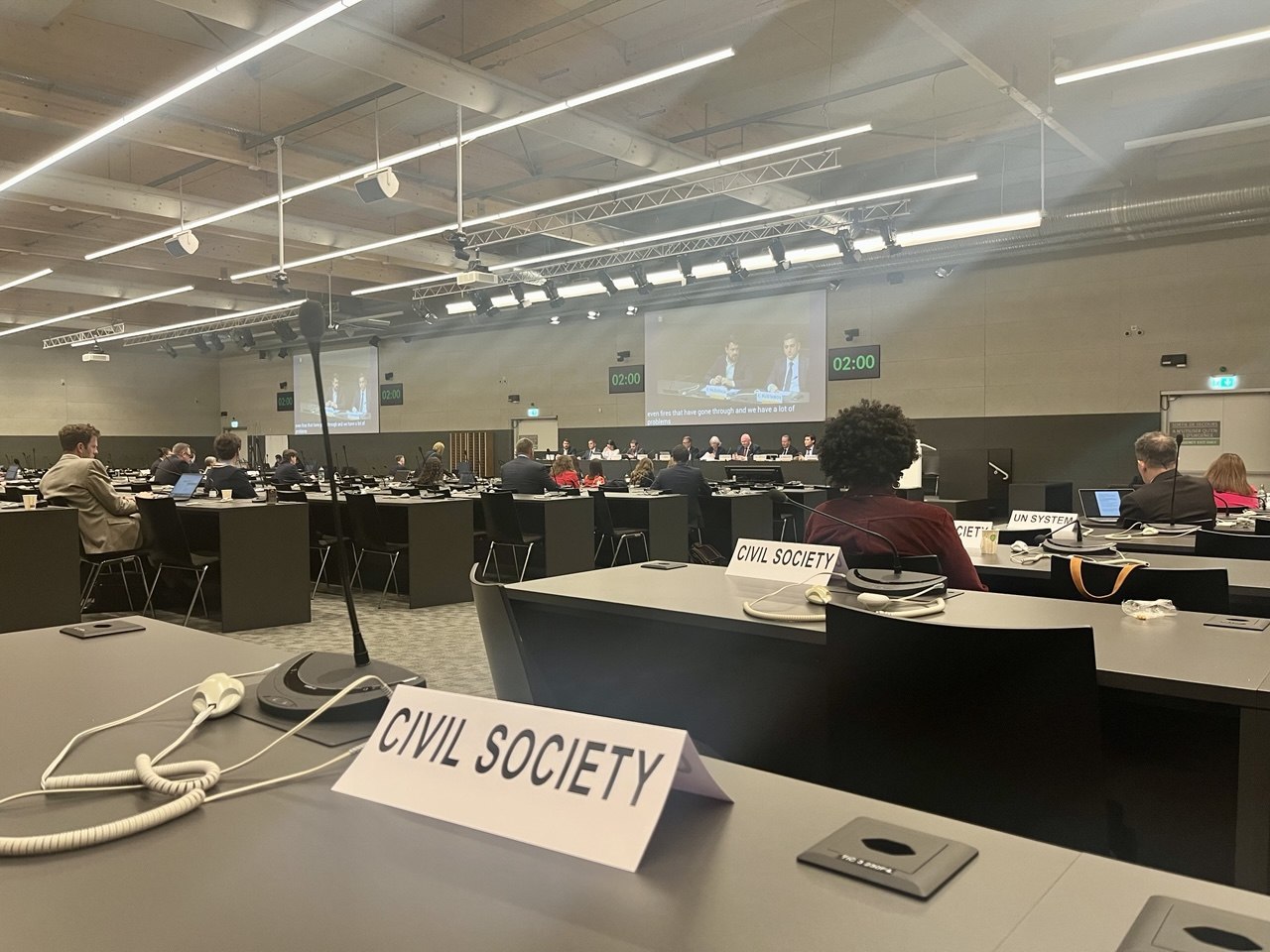
Chair, Excellencies, colleagues,
I speak on behalf of the Civil Society Engagement Mechanism. On SDG 6, our region has made progress in access, but we cannot be complacent: water quality, affordability and safe sanitation are regressing for many, and the impacts are deeply unequal.
Across countries, we see a common pattern of structural barriers. Water may be “available” on paper, yet people lack control, infrastructure or safe services.
In rural and mountain areas, communities may live near freshwater sources but still rely on unsafe systems because there is no investment in pipes, treatment or sanitation. Groundwater contamination is making water unusable in parts of the world, and the same warning signs exist in our region: agricultural runoff, fertilisers, microplastics and untreated wastewater are degrading rivers, coasts and drinking water. This harms livelihoods too, including fishers and coastal communities when waters become so polluted that beaches and fishing grounds are no longer usable.
At the same time, the governance model matters. When water systems are privatised without strong regulation, profit too often comes before the public good. Ageing infrastructure is leaking, failing and becoming unaffordable to maintain, while accountability becomes blurred. Water is a human right and a public good. Member States remain duty-bearers, even when services are outsourced.
I also want to stress who is being left behind. Multi-marginalised groups face compounded exclusion: Roma communities, Indigenous Peoples, migrants, people experiencing homelessness, and LGBTI people who depend on safe, accessible public sanitation. The lack of access to clean, drinkable water and free public toilets due to discrimination or stigma, or the shift to pay-to-use facilities, is not a minor inconvenience; it is a public health and dignity failure. Barriers to accessing care products, including menstrual health products, and adequate information stand in the way of these groups being able to maintain a hygienic, clean and healthy lifestyle. And SDG 6 will not be met without menstrual health and hygiene: information, products and safe sanitation must be treated as essential services, not optional add-ons.
Conflict is another accelerating risk. From Ukraine to Gaza and beyond, we see how water and sanitation systems are attacked, disrupted or denied. This violates international humanitarian law and turns rights into emergencies. It also blocks regional cooperation on shared waters, for example, around seas and river basins, precisely when cross-border action is most needed.
Against this backdrop of inequality, environmental stress and conflict, what should peer learning on SDG 6 now prioritise?
SDG 6 is about rights, dignity, public accountability and resilience. Let’s act as such.
Thank you.
I speak on behalf of the Civil Society Engagement Mechanism. On SDG 6, our region has made progress in access, but we cannot be complacent: water quality, affordability and safe sanitation are regressing for many, and the impacts are deeply unequal.
Across countries, we see a common pattern of structural barriers. Water may be “available” on paper, yet people lack control, infrastructure or safe services.
In rural and mountain areas, communities may live near freshwater sources but still rely on unsafe systems because there is no investment in pipes, treatment or sanitation. Groundwater contamination is making water unusable in parts of the world, and the same warning signs exist in our region: agricultural runoff, fertilisers, microplastics and untreated wastewater are degrading rivers, coasts and drinking water. This harms livelihoods too, including fishers and coastal communities when waters become so polluted that beaches and fishing grounds are no longer usable.
At the same time, the governance model matters. When water systems are privatised without strong regulation, profit too often comes before the public good. Ageing infrastructure is leaking, failing and becoming unaffordable to maintain, while accountability becomes blurred. Water is a human right and a public good. Member States remain duty-bearers, even when services are outsourced.
I also want to stress who is being left behind. Multi-marginalised groups face compounded exclusion: Roma communities, Indigenous Peoples, migrants, people experiencing homelessness, and LGBTI people who depend on safe, accessible public sanitation. The lack of access to clean, drinkable water and free public toilets due to discrimination or stigma, or the shift to pay-to-use facilities, is not a minor inconvenience; it is a public health and dignity failure. Barriers to accessing care products, including menstrual health products, and adequate information stand in the way of these groups being able to maintain a hygienic, clean and healthy lifestyle. And SDG 6 will not be met without menstrual health and hygiene: information, products and safe sanitation must be treated as essential services, not optional add-ons.
Conflict is another accelerating risk. From Ukraine to Gaza and beyond, we see how water and sanitation systems are attacked, disrupted or denied. This violates international humanitarian law and turns rights into emergencies. It also blocks regional cooperation on shared waters, for example, around seas and river basins, precisely when cross-border action is most needed.
Against this backdrop of inequality, environmental stress and conflict, what should peer learning on SDG 6 now prioritise?
- First, put water quality and wastewater at the centre: regulate agricultural and industrial pollution, tackle plastics and microplastics, and upgrade treatment and monitoring.
- Second, protect SDG 6 in humanitarian response: implement SDG 6.1 and WASH measures as core life-saving priorities, with explicit protection of civilian water infrastructure.
- Third, stop normalising exclusion: guarantee access to safe sanitation and clean water for marginalised groups, including through 24/7 public facilities where needed, and funded menstrual health programmes.
- Fourth, strengthen public governance and accountability: audit privatised systems, discourage harmful privatisation, and ensure transparent, rights-based regulation.
- Finally, rebuild cooperation on shared waters because water insecurity does not stop at borders.
SDG 6 is about rights, dignity, public accountability and resilience. Let’s act as such.
Thank you.